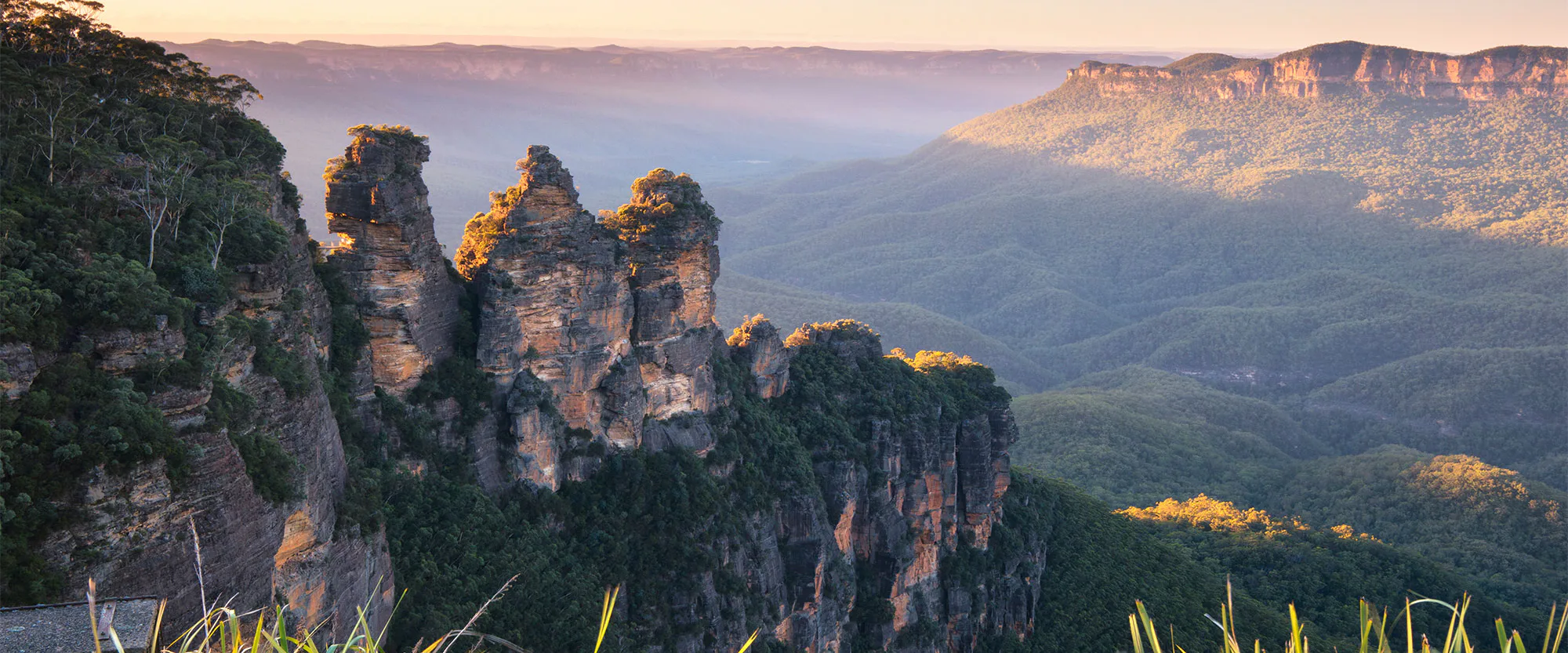
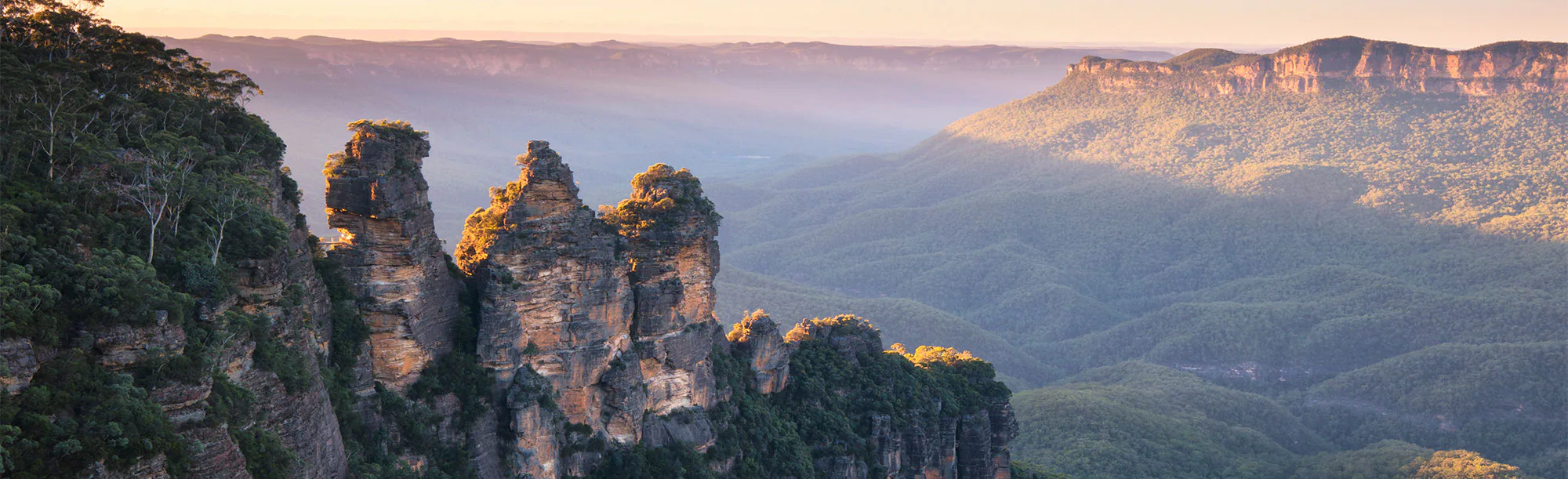
Why are the Blue Mountains blue?
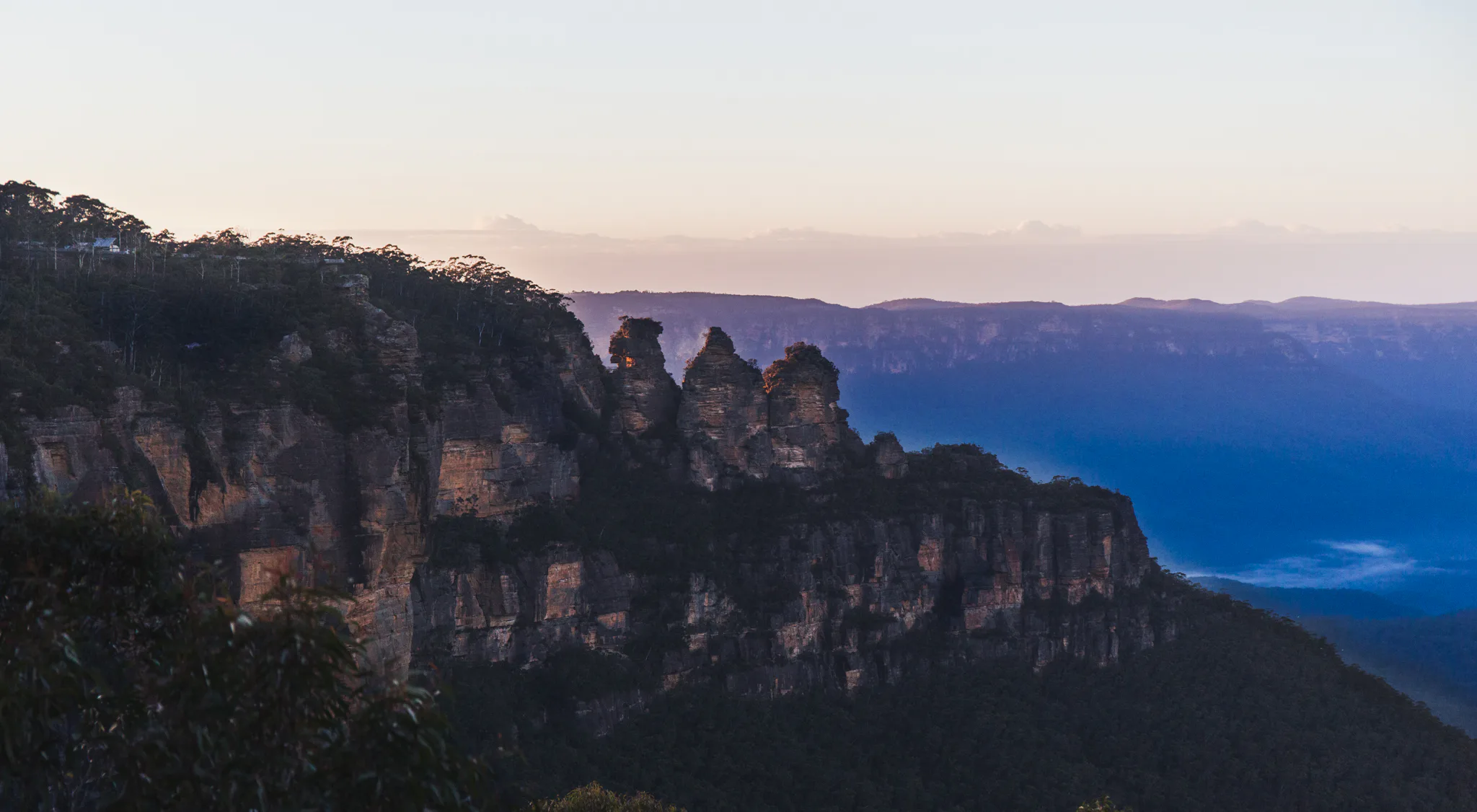
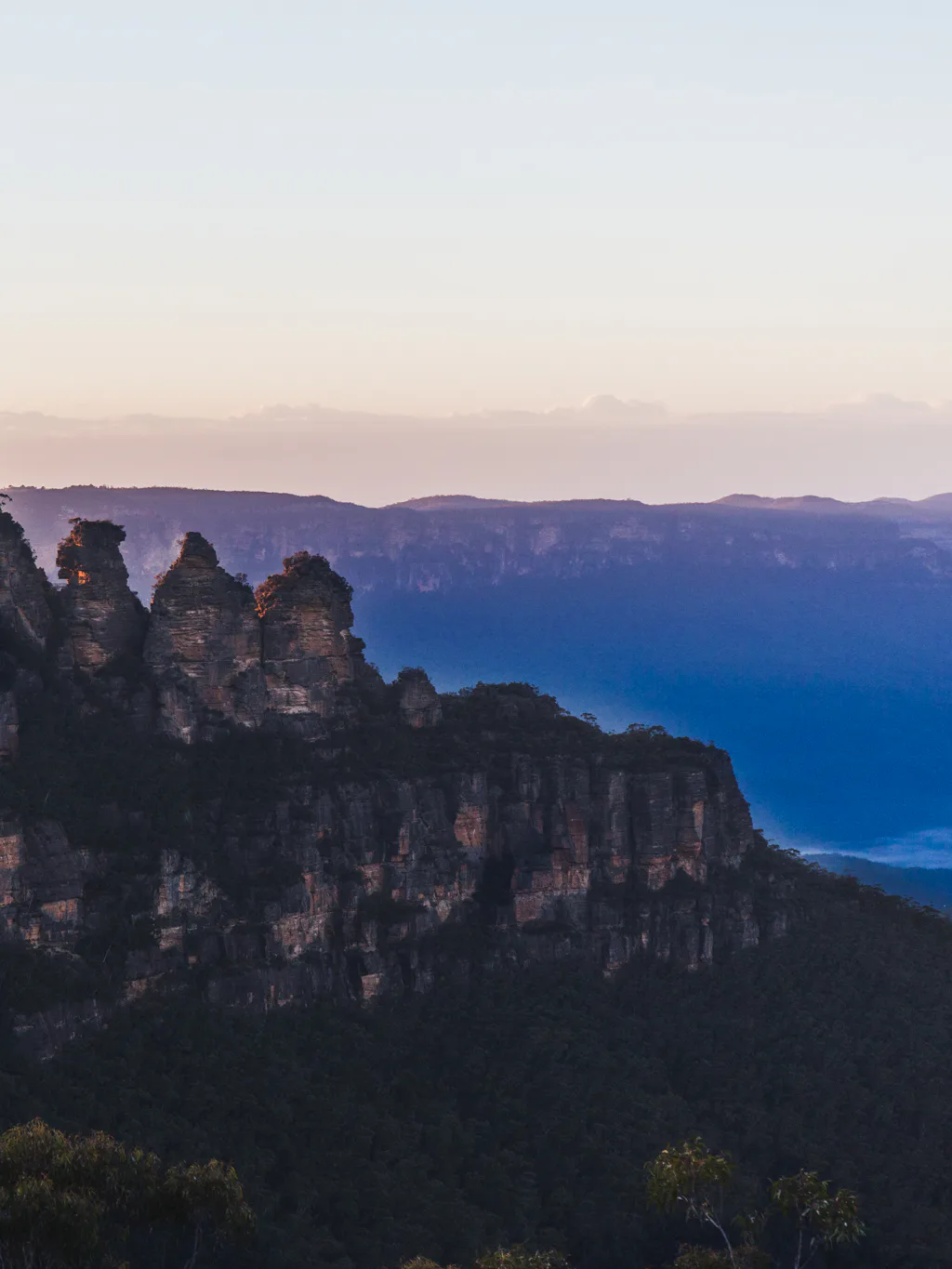
It’s true, they do look blue! When gazing across the landscape, the Blue Mountains appear to sit under an intense blue haze that has baffled many visitors to the region.
In 1955, the Town Clerk of the City of Blue Mountains contacted the Department of Physics at the University of Sydney to explain the phenomenon. Professor Harry Messel, replied:
“The haze which appears to surround any distant object is due to an optical phenomenon called ‘Rayleigh scattering’. This effect, first investigated theoretically by Lord Rayleigh, causes the rays of light which impinge on small particles to be scattered in various directions... Since the atmosphere is always laden with small dust particles, water droplets and the like and since even the air molecules themselves contributed to some extent to the scattering... if an observer look sat a distant object with the intervening atmosphere illuminated by sunlight, eyes will receive the blue scattered rays of sunlight to reflect the object itself. Therefore any distant object will always appear to display”.
So this is why the Blue Mountains are blue: Eucalyptus oil droplets emitted from the forests combine with dust particles and water vapour, scattering short wavelength rays of light which are predominantly blue in colour.